
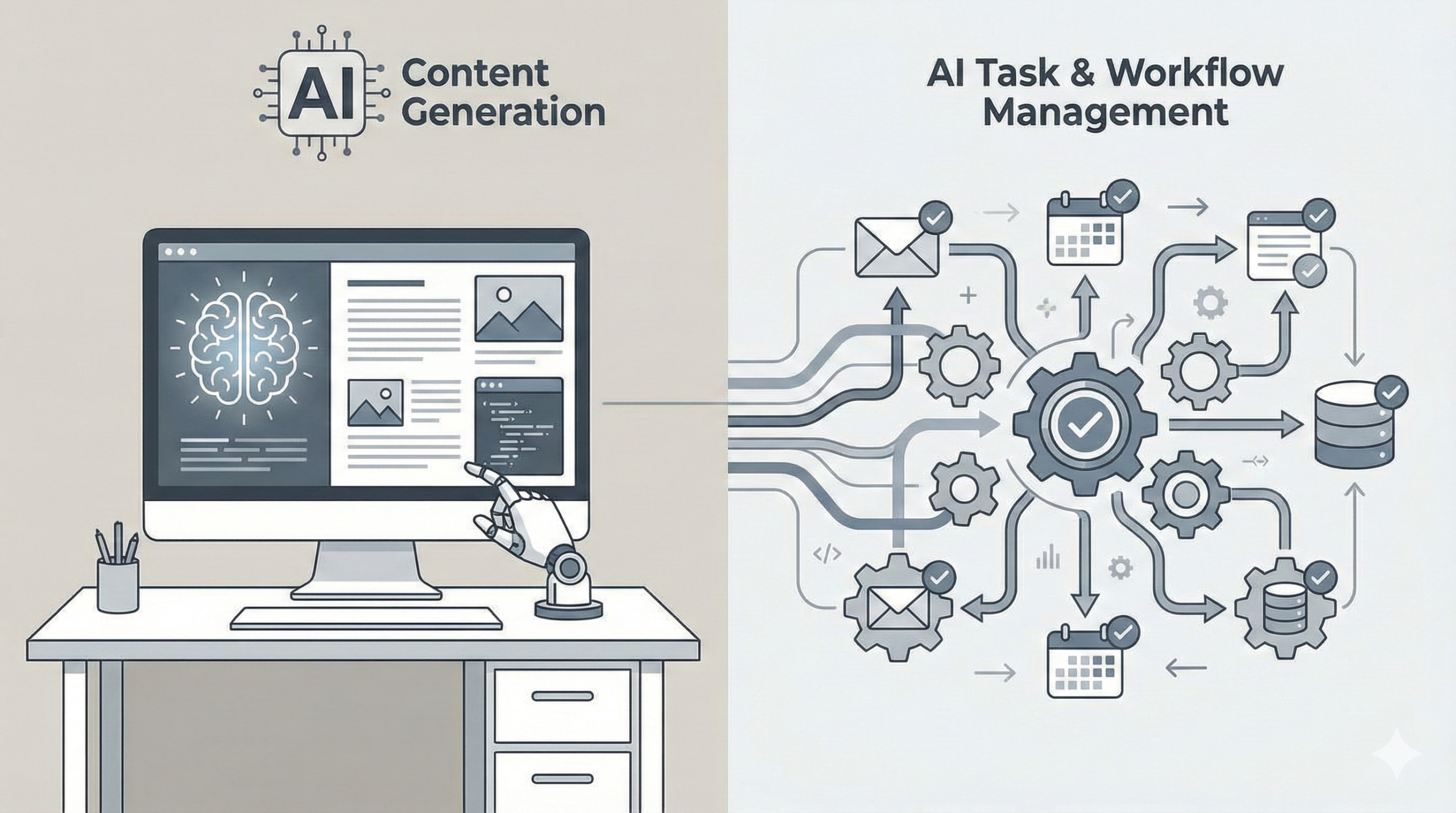
Generative AI and agentic AI are often mentioned in the same breath. That’s confusing for a lot of people, because they sound similar but behave very differently.
One creates things.
The other gets things done.
Once you understand that distinction, the rest clicks into place.
What Is Generative AI?
Generative AI is designed to produce content.
You give it a prompt, and it generates an output based on patterns it learned from data.
Examples include:
- Writing text
- Creating images
- Summarizing documents
- Generating code
- Answering questions
The interaction usually ends there.
You ask → it responds → it stops.
That’s generative AI.
What Is Agentic AI?
Agentic AI is designed to take action toward a goal.
Instead of just responding, it:
- Understands an objective
- Plans steps to reach it
- Uses tools or systems
- Checks results
- Adjusts and continues
You don’t guide every step. You define the outcome.
That’s agentic AI.
The Core Difference in One Line
Generative AI creates outputs.
Agentic AI creates outcomes.
That single shift changes how the technology is used.
A Simple Example
Let’s say you want to launch a newsletter.
With generative AI:
- You ask it to write the first issue
- You ask it to suggest subject lines
- You ask it to draft a signup page
You’re still managing the process.
With agentic AI:
- You say, “Launch a weekly newsletter on fintech”
- It drafts content
- Sets up the signup page
- Schedules emails
- Tracks open rates
- Adjusts subject lines over time
The system is now doing the work, not just assisting.
How They Think Differently
Generative AI
- Reacts to prompts
- Produces a single response
- Has no memory of goals
- Doesn’t act unless asked
Agentic AI
- Operates continuously
- Remembers objectives
- Chooses next steps
- Acts without constant prompting
One is reactive. The other is proactive.
Why Generative AI Came First
Generative AI was easier to build and safer to deploy.
It:
- Doesn’t touch real systems
- Doesn’t make decisions on its own
- Stops after each response
That made it ideal for early adoption.
Agentic AI raises harder questions about control, reliability, and trust, which is why it’s emerging later.
Where Each One Is Used Today
Common uses of generative AI
- Content creation
- Customer chatbots
- Code suggestions
- Research summaries
Common uses of agentic AI
- Customer support resolution
- Sales follow-ups
- Workflow automation
- Monitoring and incident response
Many products now combine both.
Why People Are Paying Attention to Agentic AI
Generative AI saves time on tasks.
Agentic AI saves time on entire workflows.
Instead of helping someone do the work faster, it reduces the amount of work humans need to do at all.
That’s why companies are excited. It directly impacts cost, speed, and scale.
Which One Is “Better”?
Neither. They serve different purposes.
- If you need ideas, content, or answers, generative AI is enough.
- If you need something executed end to end, agentic AI is the better fit.
In practice, agentic systems often use generative AI internally to think, write, and reason.
Final Takeaway
Generative AI is about creation.
Agentic AI is about action.
As AI evolves, we’re moving from tools that respond to tools that operate. Understanding the difference helps you choose the right approach instead of chasing buzzwords.
If generative AI was the first big wave, agentic AI is the next one—and it’s just getting started.