
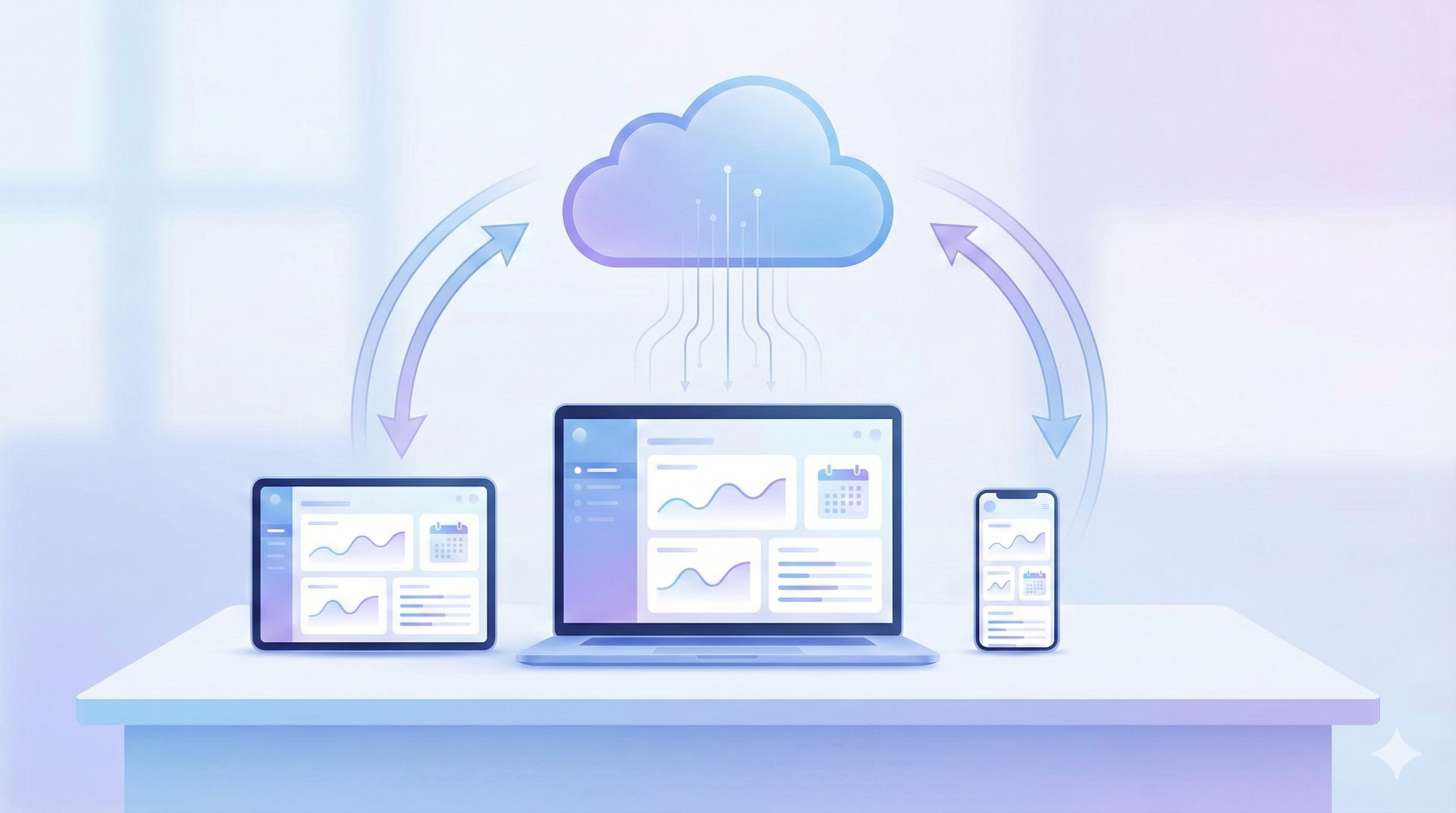
An AI agent is a type of artificial intelligence built to achieve a goal by taking actions on its own — instead of waiting for step-by-step instructions. Unlike basic AI tools that give a one-time response and stop, an AI agent can keep working until the task is done.
People are paying attention because this marks a big shift in how AI is used. AI is moving from being a helper that responds to becoming a system that can act. That change affects how businesses operate, how software is built, and how everyday work gets done.
What an AI Agent Is
At its core, an AI agent is software that can take action.
Most people are used to AI that reacts. You ask a question — it answers. You give a command — it produces output. An AI agent goes a step further: you give it an objective, and it figures out how to accomplish it.
An agent can decide what steps are needed, execute them, check the results, and continue until the goal is complete. It doesn’t need constant supervision once the task is clear.
That doesn’t mean it’s independent or self-aware. It still follows rules and boundaries set by humans. The difference is that it can handle a sequence of actions instead of stopping after one.
Why AI Agents Matter
AI agents matter because most real-world work isn’t a single-step process.
In daily life and in organizations, tasks involve follow-ups, coordination, checking progress, and adapting to changes. Even simple steps can add up to a lot of time.
AI agents ease that load by managing the whole process. Instead of helping with one piece, they can take care of the entire task from start to finish — saving time, reducing delays, and cutting down on manual effort.
They also change how people use technology. Rather than describing how to do something, users can simply say what they want done — and the system executes it.
That’s why AI agents are viewed as more than just another feature. They represent a fundamental shift in how digital systems participate in real work.
How an AI Agent Works — in Simple Terms
An AI agent follows a repeating loop:
- Understands the goal. For example, resolving a customer issue, generating a report, or monitoring a system.
- Plans the actions. This could mean gathering information, sending updates, or performing calculations.
- Takes those actions using connected tools or systems.
- Checks results and decides what to do next.
This cycle continues until the goal is completed or the agent is told to stop.
Most agents use generative AI internally to reason, write, or summarize. What makes them agents is the extra ability to plan, act, and continue working without constant prompting.
Why This Matters in India and Real-World Settings
AI agents are especially helpful in high-volume, resource-constrained environments.
In India, many businesses manage large numbers of transactions, customers, and operations with relatively small teams. AI agents are being deployed to handle customer support, sales follow-ups, operations, and compliance tasks.
They also shine in multilingual and always-on contexts — operating across languages, time zones, and digital channels without adding new staff.
Beyond businesses, AI agents are useful in logistics, infrastructure monitoring, and public digital services — all of which require constant action and fast responses. That practicality is why they’re now discussed beyond tech circles.
What to Expect Next
AI agents are still early in development.
Most today are narrow in scope, built for specific workflows, and operate within defined boundaries. But over time, they’ll become more reliable, easier to monitor, and better integrated into everyday tools.
Expect stronger controls and transparency, with built-in safeguards and human oversight as agents take on more responsibility.
Rather than replacing existing tools, AI agents will work alongside them — taking over repetitive, process-heavy tasks while humans focus on judgment and decision-making.
AI agents mark a shift from AI that responds to AI that acts. Understanding this difference helps explain why they’re attracting so much attention — and how they can fit into everyday technology without needing a technical background.